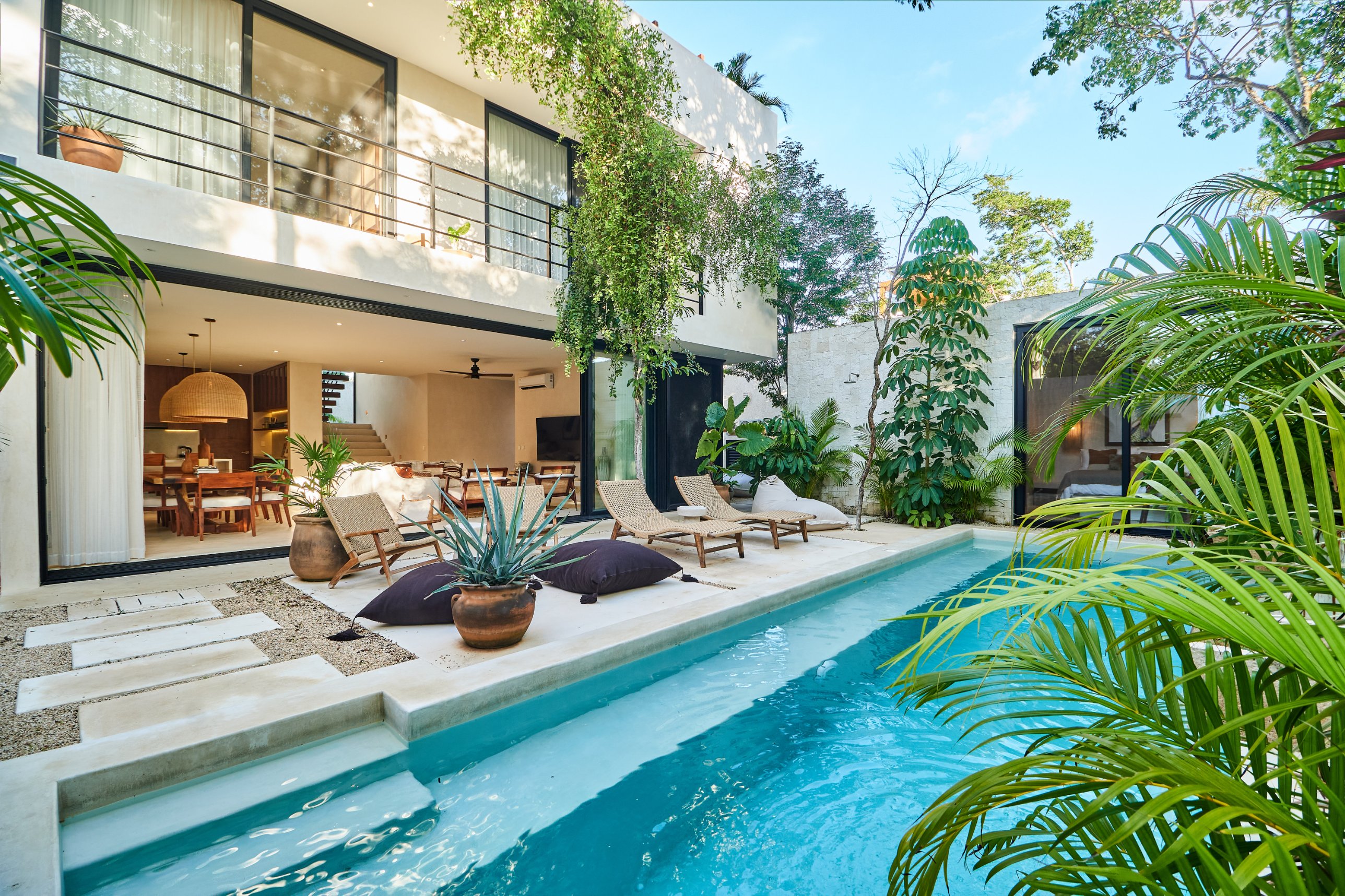
Everything Americans need to know about buying real estate in Mexico — legal framework, fideicomiso, costs, taxes, and step-by-step process explained by a bilingual expert.
Americans have been discovering Mexico’s real estate market for decades — but many still approach it with unnecessary hesitation or, worse, without the knowledge they need to protect their investment.
The truth is: buying property in Mexico as an American is entirely legal, relatively straightforward, and often a life-changing financial decision. You just need to understand how the system works.
This guide covers everything you need to know, from legal framework to closing costs — written from the perspective of someone who has helped dozens of American buyers successfully acquire luxury properties across Mérida, Tulum, and the Riviera Maya.
Can Americans Own Property in Mexico?
Yes — with one important nuance.
Mexico’s Constitution (Article 27) restricts direct foreign ownership of property within what is called the Restricted Zone: any land within 100 kilometers of Mexico’s borders or 50 kilometers from any coastline.
Since most of the destinations that attract American buyers — Tulum, the Riviera Maya, Cancún, Los Cabos — are coastal, foreigners cannot hold the title to these properties in their own name.
However, there are two perfectly legal solutions:
- Fideicomiso (Bank Trust) — The most common structure for residential properties
- Mexican Corporation (SAPI or S.A. de C.V.) — Typically used for commercial or investment properties
For properties in the Restricted Zone — which includes virtually all of Mexico’s coastal destinations — the fideicomiso is the standard legal structure for foreign buyers. This applies whether you’re buying in Tulum, the Riviera Maya, Cancún, or Los Cabos.
What is a Fideicomiso?
A fideicomiso is a bank trust, similar in concept to a revocable living trust in the United States.
Here’s how it works:
- A Mexican bank (the trustee) holds the legal title to the property
- You (the beneficiary) hold all rights to use, rent, modify, sell, or pass the property to your heirs
- The bank’s role is purely administrative — they hold title on paper only
- You retain full control and benefit from all appreciation, rental income, and resale proceeds
Think of the bank as holding the title in trust for you — not owning it in any meaningful sense.
Key details about fideicomiso:
- Initial term: 50 years, automatically renewable
- Annual bank fee: approximately $500–$700 USD per year
- The trust can name beneficiaries who would inherit the property
- It can be transferred to a new buyer simply by changing the beneficiary
Fideicomiso is a mature, well-established legal structure that has been in place since 1971. Major Mexican banks including BBVA, Scotiabank, HSBC, and Santander all offer trust services.
Buying in Mérida, Yucatán
If you’re buying in Mérida, Yucatán, a fideicomiso is still required for foreign buyers. The same setup costs and annual fees apply ($1,000–2,000 to establish, ~$500–700/year). What makes Mérida attractive is not the ownership structure — which is identical to coastal markets — but rather its combination of factors: Mexico’s safest large city, a thriving expat community of 30,000+ residents, world-class hospitals and schools, direct international flights, and a lower entry price point than coastal luxury markets.
Mérida’s real estate market has attracted a growing number of American and Canadian buyers precisely because of what the city offers as a place to live — and that story holds regardless of the ownership structure.
The Buying Process Step by Step
1. Define Your Goals
Before you start viewing properties, be clear about your purpose:
- Personal use — vacation home or retirement
- Investment — rental income and appreciation
- Mixed use — personal enjoyment plus rental returns when not in use
Your goal affects which markets, property types, and price points make most sense.
2. Work with a Bilingual Real Estate Advisor
Not all real estate agents in Mexico are created equal. Look for someone who:
- Is fluent in English and Spanish
- Has experience working with American buyers specifically
- Can guide you through legal, tax, and banking requirements
- Has a proven track record of closed transactions
This is not the place to cut corners. The right advisor protects your interests from search to closing.
3. Make an Offer and Sign a Purchase Agreement
Once you’ve found a property, you’ll sign a promissory agreement (contrato de promesa de compraventa) with a deposit — typically 10% of the purchase price.
This document establishes:
- Purchase price and currency
- Payment schedule
- Closing date
- Conditions for rescission
Important: Have this document reviewed by an independent Mexican attorney (notario or attorney), not just the seller’s agent.
4. Open a Fideicomiso (if needed)
Your Mexican bank will open the fideicomiso. This process takes 4–8 weeks and requires:
- Passport copies
- Proof of address (US bank statement or utility bill)
- Application fee ($500–$1,000 USD)
5. Due Diligence
Your attorney (or notario) will verify:
- Clean title with no liens or encumbrances
- Proper zoning
- Tax payment history
- Any HOA obligations
- Building permits (for new construction)
6. Closing
Mexican closings take place before a Notario Público — a government-appointed notary with significantly more legal authority than a US notary. The notario:
- Verifies the seller’s authority to sell
- Calculates and collects applicable taxes
- Registers the transaction with the Public Registry
- Issues the new title
Closings typically take 30–60 days from signed purchase agreement to deed transfer.
Closing Costs: What to Budget
This is where many American buyers are caught off guard. Mexican closing costs are substantially higher than in the US.
Typical buyer-side closing costs (1–3% of purchase price):
| Cost | Approximate Amount |
|---|---|
| Acquisition Tax (ISAI) | 2–4% of purchase price |
| Notario fees | 1–2% of purchase price |
| Fideicomiso setup | $1,000–$2,000 USD |
| Attorney fees | $1,500–$3,000 USD |
| Registration fees | 0.1–0.5% |
| Total | 4–8% of purchase price |
Example: On a $500,000 USD property, expect to budget $25,000–$40,000 USD in closing costs.
Sellers in Mexico also pay closing costs — primarily capital gains tax (ISR) — which affects negotiations.
Taxes and Ongoing Costs
Property Tax (Predial)
Mexican property taxes are remarkably low compared to the United States — typically $200–$800 USD per year even on high-value properties.
Fideicomiso Annual Fee
If your property requires a trust: approximately $500–$700 USD per year.
HOA Fees (if applicable)
New developments typically have monthly HOA fees. These vary widely by project and amenities.
Rental Income Tax
If you rent your property, Mexico imposes income tax on rental earnings. American citizens also have reporting obligations in the US (FBAR if foreign accounts exceed $10,000; FATCA for larger holdings). Consult a tax professional familiar with both US and Mexican tax law.
Financing: Cash vs. Mortgage
Most international buyers in Mexico purchase with cash. This is the simplest, fastest route.
Mexican mortgages for foreigners are available but have significant limitations:
- Higher interest rates (typically 9–14% in MXN)
- Shorter terms than US mortgages
- More complex qualification process
US financing options that some buyers use:
- Home equity line of credit (HELOC) on US property
- Cash-out refinance on existing US real estate
- Private or portfolio lenders with Mexico experience
We strongly recommend connecting with a mortgage broker familiar with cross-border transactions if you need financing.
Common Mistakes to Avoid
1. Skipping independent legal review
The seller’s agent represents the seller. Always hire your own attorney.
2. Wiring money without verification
Verify wire transfer instructions via phone — not email — directly with your attorney or notario. Wire fraud targets real estate transactions globally.
3. Buying without seeing the property first
Visit before you buy. What looks stunning in photos may have context you need to evaluate in person.
4. Underestimating closing costs
Budget 6–8% on top of purchase price.
5. Not understanding the fideicomiso renewal
Your fideicomiso is valid for 50 years — but you must renew it before expiration. Set a reminder and budget for renewal fees.
Why Mérida and Tulum Are Leading Destinations for American Buyers
Mérida offers:
- Mexico’s largest established expat community (30,000+ residents)
- Lower cost of living than coastal destinations
- Colonial architecture and cultural richness
- One of Mexico’s safest cities
- Growing expat community with English-speaking infrastructure
- Strong long-term appreciation trends
Tulum offers:
- Strong short-term rental demand (Airbnb / VRBO)
- Luxury eco-development market
- Proximity to cenotes, jungle, and Caribbean beaches
- High appreciation potential in early-stage developments
Ready to Start Your Search?
Navigating Mexico’s real estate market as an American buyer requires local expertise, legal guidance, and a trusted bilingual advisor by your side.
At México Luxury Homes, I specialize exclusively in helping American and Canadian buyers find exceptional properties in Mérida, Tulum, and the Riviera Maya. Every transaction I oversee is guided from property search through to deed transfer.
Let’s start your search today. Schedule a no-obligation consultation and tell me what you’re looking for.