From a real estate advisor who's watched hundreds of Americans and Canadians make the move: the genuine advantages, the real challenges, and what separates those who thrive from those who return.
I’ve sat across from hundreds of buyers who’ve fallen in love with the idea of Mérida. I’ve also watched some of them return to the U.S. after 18 months, and others build their most satisfying years there. The difference is usually preparation and honest expectations — which is what this article is about.
Why Mérida Has Become a Top Expat Destination
The growth in Mérida’s expat community is not hype. The city’s foreign-born population has grown from roughly 10,000 to 30,000+ in the last decade, driven by a specific set of factors that genuinely differentiate it from other expat destinations in Mexico.
Safety. This is the single most cited factor. Mérida consistently ranks as Mexico’s safest major city. For many buyers, especially retirees and remote workers, this alone changes the calculus entirely.
Cost of living. A comfortable life in a renovated colonial home in Mérida — housekeeper, driver, dining out regularly, private health care — runs $2,500–4,000/month for most couples. North Americans accustomed to major metro costs find this transformative.
Quality of infrastructure. Mérida punches significantly above its weight class. International airport with direct flights to Houston, Miami, Toronto, and Mexico City. Modern hospitals with U.S.-trained physicians. A functioning expat services ecosystem (tax advisors, immigration lawyers, English-speaking doctors).
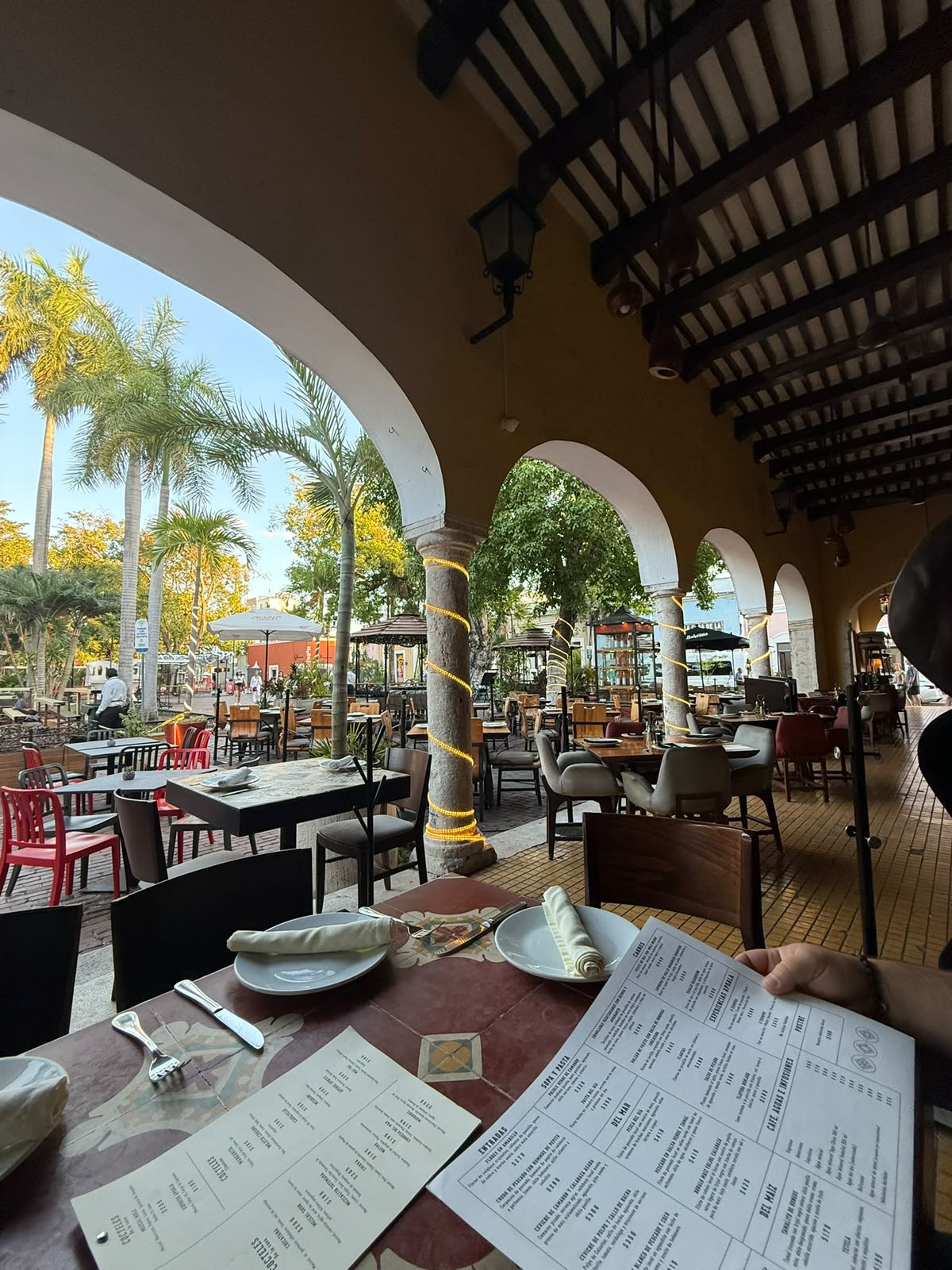
Cultural richness. Mérida is a genuine city — not a beach resort. The capital of Yucatán, it has a distinct Maya-influenced culture, a serious culinary scene, world-class cenotes within 30 minutes, and a climate of cultural events and civic life that appeals to buyers tired of resort-town expat communities.
The Real Challenges
I wouldn’t be doing you any favors by selling only the positives. Here’s what actually challenges people:
The Heat
This is not optional to mention. Mérida is genuinely, seriously hot from April through September. Temperatures regularly reach 38–42°C (100–108°F) with humidity. This is not “warmer than Chicago.” This requires acclimatization, behavioral adaptation (avoiding midday outdoor activity), and air conditioning in your home.
People who struggle with Mérida often underestimate this. People who thrive typically have either adapted their lifestyle around it (morning activities, afternoon siesta, evening outings) or leave for a month or two during peak heat.
My practical advice: Visit in July or August before you buy. If you can tolerate two weeks, you can tolerate living there.
Language
Spanish fluency matters more in Mérida than in coastal expat communities. Unlike Tulum or Playa del Carmen, Mérida is a real city where much of daily life operates in Spanish. Tradespeople, government offices, doctors outside the expat bubble, and neighbors may have limited English.
This is both a challenge and an argument for Mérida’s authenticity. Most long-term expats report learning functional Spanish within 18–24 months of full immersion. The process is real, and it makes the experience more rewarding.
Driving and Infrastructure Outside the City
The city itself is well-navigable. The roads to and from the Yucatán Peninsula’s many cenotes, beaches (Progreso is 40 minutes), and archaeological sites range from good to challenging. Understanding how to get around — whether by hiring a driver or learning to navigate — is part of settling in.
What Buyers Get Wrong About Mérida Real Estate
“I’ll renovate an old colonial for a project”
Colonial renovation projects are alluring, and some of Mérida’s most beautiful properties are the result of thoughtful restoration. They are also complicated, time-consuming, and expensive in ways that surprise buyers.
Structural issues in century-old buildings are common and not always visible to the eye. Labor is affordable, but managing a renovation from abroad — or even from within the city if you don’t speak Spanish — requires trusted local partners. I’ve seen beautiful projects go beautifully and others spiral to 3x budget and 2x timeline.
If you want a colonial renovation: Factor in 20–30% contingency, hire a reputable project manager, and be prepared for surprises.
“The market is the same as when my friend bought three years ago”
Mérida’s property market has moved substantially. Centro Histórico, Paseo de Montejo, and the established norther neighborhoods have seen significant appreciation. Properties that sold for $150,000 in 2020 in prime locations now trade at $250,000–350,000.
The entry-level luxury tier ($200,000–350,000) remains accessible by U.S. standards. But buyers expecting 2020 prices will be disappointed, and that disappointment can lead to purchasing in suboptimal locations chasing price rather than quality.
The Neighborhoods That Matter
Centro Histórico: The authentic core — colonial streets, markets, life at scale. Higher density, occasional noise, but the genuine Mérida experience. Best for buyers who want to be in the city. Entry price for quality renovated colonials: $250,000–500,000.
Paseo de Montejo: Mérida’s grand boulevard. Historic mansions (mostly converted to commercial use), high-end restaurants and hotels, and nearby residential streets with an upscale character. More expensive, quieter, more familiar to North American sensibilities.
Norte / Altabrisa: The modern northern zone. Gated communities, U.S.-style infrastructure, international grocery stores, private clubs. Less “authentic Mérida” but high quality of life and the most accessible for buyers who want a comfortable transition. Strong expat community here.
Hacienda Zone: The countryside surrounding Mérida has some of Mexico’s most extraordinary colonial haciendas — former sisal estates converted to luxury homes. These are genuinely unique properties. Distances of 20–60 minutes from the city; requires a car and a different relationship with daily logistics.
How to Actually Make It Work
After watching hundreds of buyers, the ones who succeed share certain patterns:
They visit multiple times before committing. A week in Mérida and a week living in Mérida are different. The buyers who do well have typically spent 2–4 weeks over multiple trips before purchasing.
They invest in the basics before arrival. A real estate attorney for the purchase. A property manager if it’s not their primary residence. A trusted immigration advisor. These costs are small relative to the purchase price and eliminate the most common problems.
They connect with the existing community. Mérida has active expat groups (Facebook groups with 10,000+ members, regular meetups). The institutional knowledge available from existing residents is invaluable and remarkably generous.
They keep their expectations about integration realistic. You will not become fully Mexican. You will likely speak B2 Spanish in year two, not C1 Spanish in year one. Your social circle will be mixed — expats and Yucatecan friends — and that’s fine.
The Bottom Line
Mérida works for a specific kind of buyer: someone who wants a genuinely safe, culturally rich, cost-effective life in a real city — and who can adapt to the climate and (if not already bilingual) learn Spanish. For that person, it can be transformative.
It does not work well for buyers expecting a coastal-resort lifestyle, those not prepared for the heat, or those hoping to exist in an English-only bubble. Those buyers often find themselves selling 24 months in.
The investment case for Mérida property is separately compelling — but that’s a different article.
Thinking about relocating to or investing in Mérida? Let’s talk through your specific situation. Schedule a call with Alberto for an honest, personalized assessment.